
Most of us think a "bad day at the office" involves a paper jam, a lukewarm latte, or a meeting that definitely could have been an email. But for some people, "clocking in" involves a genuine, statistical gamble with their lives. I’ve always been fascinated, and, frankly, a little bit terrified, by the professions that sit at the top of the danger charts.
As a professional Will writer, I deal with the "aftermath" and the "what ifs" every single day. While my job is safely tucked away behind a desk, I spend a lot of time thinking about risk. And let’s be honest, whether you’re dangling from a skyscraper or sitting in a cubicle, life is unpredictable. But just how high are the stakes for some workers?
Let’s take a look at the careers where the "health and safety" briefing is more of a survival guide.
The "Danger Zone": The World’s Deadliest Occupations
If you think your commute is stressful, imagine your workplace being a moving vessel in the middle of a Bering Sea storm or a 200-foot-tall Douglas fir. Here are the jobs that consistently top the list for the highest fatality rates globally.
1. Logging Workers (The Heavyweight Champion of Risk)
Logging isn’t just about looking good in flannel. It is statistically the deadliest job you can have. With a staggering 110.4 deaths per 100,000 workers, loggers face a lethal combination of heavy machinery, extreme heights, and the unpredictable physics of falling trees (aptly nicknamed "widow-makers"). One wrong move or a sudden gust of wind, and it’s game over. It’s a job that requires total focus, yet even that isn't always enough.
2. Commercial Fishing
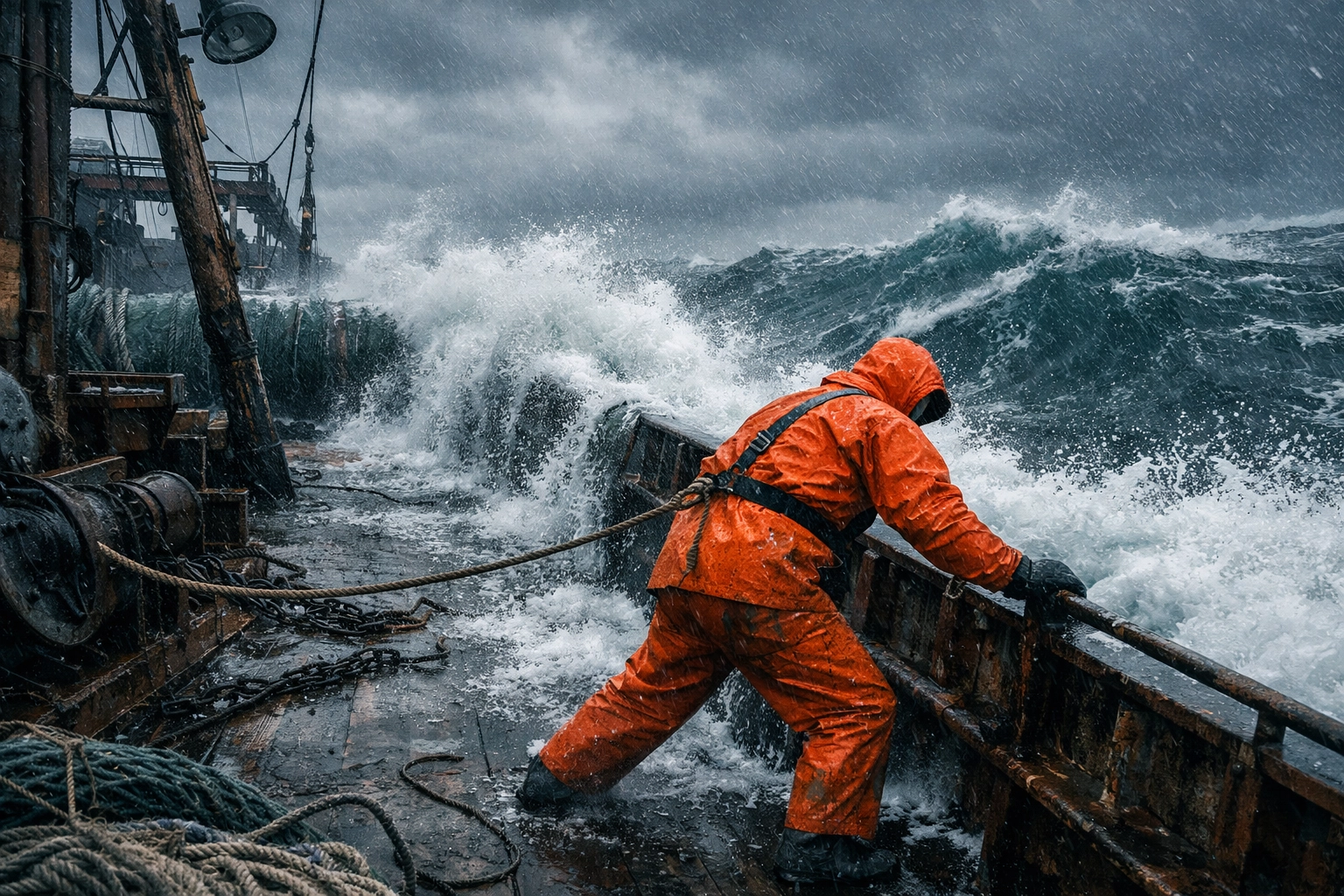
Think Deadliest Catch is just for TV? Think again. Deep-sea fishing sees about 100 deaths per 100,000 workers. You’re dealing with freezing temperatures, slippery decks, heavy equipment, and the ocean, an environment that is actively trying to kill you. When things go wrong at sea, help isn't exactly around the corner.
3. Aircraft Pilots and Flight Engineers
While commercial airline travel is incredibly safe for passengers, small-craft pilots and flight engineers face a higher risk (about 58.4 deaths per 100,000). Crop dusting, emergency rescue, and bush piloting involve low altitudes and high-pressure environments where equipment failure or a sudden change in weather can be fatal.
4. Roofers and Construction
Falls are the leading cause of death in the construction industry. Roofers, in particular, face a rate of 51.5 deaths per 100,000. It sounds mundane compared to deep-sea fishing, but a 30-foot drop is just as final as a North Sea wave.
5. Mining and Heavy Industry
From cave-ins to toxic gas exposure, miners (25.7 deaths per 100,000) operate in some of the most hostile environments on Earth. Even with modern technology, the sheer scale of the machinery and the volatility of the ground make it a high-stakes profession.
The Statistical Reality: It’s Not Just the "Big" Jobs
I’m often told by clients, "Oh, I don't need to worry about a Will yet, Steve; I’m not exactly a deep-sea diver." I usually give them a polite smile and remind them that while you might not be felling timber, life has a funny way of throwing curveballs.
The fatality rate across all occupations is roughly 3.3 per 100,000. That’s low, sure. But "low" doesn't mean "zero." And more importantly, these statistics only track fatalities. They don't track the thousands of people who suffer life-changing injuries or illnesses that leave them unable to work or, more critically, unable to make their own decisions.
This is where my world, the world of estate planning, meets the "real world" of risk management.
The Gamble We All Take (And Why an LPA is Non-Negotiable)
If you work in a high-risk job, you probably have insurance. You might have a helmet, a harness, or a life jacket. But do you have a Lasting Power of Attorney (LPA)?
I see a lot of confusion about this. People think an LPA is something you only need when you're 90 and can't remember where you put your keys. That is a seriously bad move. An LPA is for while you are still alive.
If you have an accident at work, whether it’s falling off a ladder or a stressful job leading to a sudden stroke, and you lose the capacity to make decisions, your family is in a legal mess. Without an LPA, your bank accounts (even joint ones, sometimes!) can be frozen. Your partner might not be able to make decisions about your medical care.
I’ve written about this before, and it’s worth a read if you’re still unsure: Which is more important, a Will or a Lasting Power of Attorney?. Spoiler alert: they’re both essential, but for very different reasons.

The Two Types of Protection
When we talk about LPAs, we’re looking at two distinct areas:
- Property and Financial Affairs: This allows your chosen person to pay your mortgage, manage your taxes, and keep your business running if you can't.
- Health and Welfare: This covers things like where you live and what medical treatment you receive.
If you’re working a "deadly" job, or even just a "slightly risky" one, this is your legal safety harness. If you want to cut through the legal speak, I’ve put together a guide here: Lasting Power of Attorney jargon explained.
When the Gamble Doesn't Pay Off: The Role of the Will
Now, let’s talk about the part people like to avoid: the "after."
If the worst happens and you don't return from the shift, your Will is the final set of instructions for your family. If you don't have one, the government decides who gets what via the laws of intestacy. (And trust me, the government’s idea of a "fair split" probably isn't the same as yours).
I often hear, "I don't have enough assets to need a Will." My response? Do I need a Will? (Hint: Yes). It’s not about how many millions you have in the bank; it’s about who looks after your children, who gets your sentimental items, and making sure your partner isn't kicked out of the house because of a legal technicality.
For those in high-stakes careers, a Will isn't just a document; it’s an act of love. It ensures that the people you were working so hard to provide for are actually protected if you’re no longer there to do it yourself.
Why Proactivity Trumps Luck Every Time
In my opinion, the most dangerous job in the world isn't logging or fishing: it’s the job of "Waiting for the Right Time."
I’m wary of people who say they’ll "get around to it" once the kids are older, or once they’ve changed careers, or once they’ve bought the next house. Life doesn't wait for your schedule to clear. Whether you are a structural ironworker or a software engineer, you are currently operating without a net if you haven't sorted your estate planning.

I’ve spent years as a knowledgeable guide in this field, and I’ve seen the "legal mess" (to use a technical term) that occurs when someone passes away or loses capacity unexpectedly. It is heartbreaking, and it is almost always avoidable.
A Sensible Checklist for the "High-Stakes" Life:
- Audit your risk: Do you work in a physically demanding or dangerous environment?
- Check your "Living Support": If you were incapacitated tomorrow, who would pay the bills? (Get that LPA sorted).
- Check your "Legacy": Is your Will up to date? Does it reflect your current family situation?
- Review regularly: Life changes. If you’ve had a child, got married, or bought a house, your old plans might be useless. Check out my reasons to review your Will.
Let’s Take the Gamble Out of Your Future
You don’t have to be a logger facing down a 100-foot tree to need protection. We all live on the edge, even if that "edge" is just a slippery kitchen floor or a distracted driver on the M1.
My goal at The Professional Will Writer is to make this whole process as painless as possible. No stuffy offices, no confusing Latin phrases: just a friendly chat about how to protect your family. We can talk about everything from protecting your home to planning for vulnerable beneficiaries.
If you’re ready to stop gambling with your family’s future, why not have a free, no-obligation chat with me? I promise I won't make you wear a hard hat.
Just get in touch via my quick enquiry page, and we’ll get it sorted.
So, what’s your next move? Are you going to keep crossing your fingers, or are you going to put a plan in place?
I know which one I’d choose.
Stephen Pett is the owner of The Professional Will Writer, helping families across the UK secure their legacy with a friendly, common-sense approach to estate planning.